




OFFICIAL MEDIA CHANNELS
New film trailers and videos
Check us out!
Check out Unreal Radio!


| The Unreal Film Festival is owned and managed by Cellardoor Cinema. Copyright 2015. |

Rather than show another technique this time around, I felt the need to breakdown what a special
fx make up artist’s kit should consist of (especially if you are or aspire to be a working one – going
from set location to location). The pics of reference this time around will be even more beneficial
to you all, as they fully show how I departmentalize my gear for quicker use and how to simply
keep items commonly used together, near each other. Often overlooked, this is absolutely
something that can help. Let’s get started:
fx make up artist’s kit should consist of (especially if you are or aspire to be a working one – going
from set location to location). The pics of reference this time around will be even more beneficial
to you all, as they fully show how I departmentalize my gear for quicker use and how to simply
keep items commonly used together, near each other. Often overlooked, this is absolutely
something that can help. Let’s get started:

| Unreal Film Fest Sponsors: |




Stay up to date on Fest News






THE BLOOD DEPARTMENT:
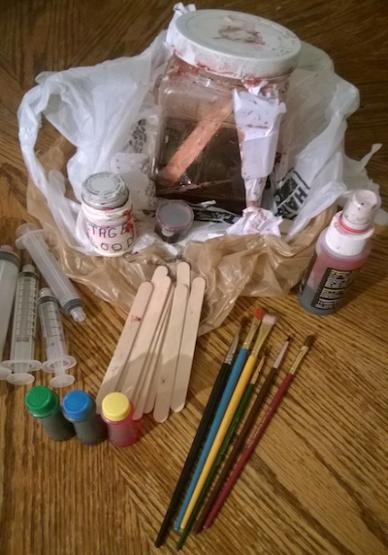
This is where I keep all of my fake blood and the
most used, fake blood applicators together. The
reason I keep these separate is because of the
fact that most fake bloods are sticky and tend to
leak a bit, which are both good reasons to keep
them separate from your other gear, but it’s also
a why I always keep them wrapped in some kind
of plastic bags. It's also a good idea to keep a
few extra plastic bags here as well.
I also keep food coloring and red cake frosting
here, should you have to make your own fake
blood or need to have bloody spit, mouths, or
teeth.
As for applicators, I keep some popsicle sticks,
an assortment of fine art brushes, and various
sizes of clear syringes (no needles, of course).
I also keep a pack of wet wipes in this section
which, and along with the extra plastic bags,
helps to speed along the clean-up process after
the shoot.
This is where I keep all of my fake blood and the
most used, fake blood applicators together. The
reason I keep these separate is because of the
fact that most fake bloods are sticky and tend to
leak a bit, which are both good reasons to keep
them separate from your other gear, but it’s also
a why I always keep them wrapped in some kind
of plastic bags. It's also a good idea to keep a
few extra plastic bags here as well.
I also keep food coloring and red cake frosting
here, should you have to make your own fake
blood or need to have bloody spit, mouths, or
teeth.
As for applicators, I keep some popsicle sticks,
an assortment of fine art brushes, and various
sizes of clear syringes (no needles, of course).
I also keep a pack of wet wipes in this section
which, and along with the extra plastic bags,
helps to speed along the clean-up process after
the shoot.
THE QUICK REPAIR/FIX DEPARTMENT:
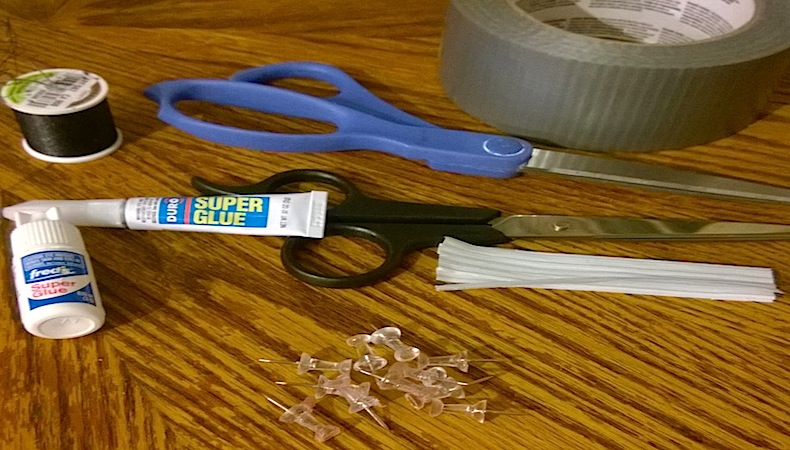
Face it, no matter what you’ve prepared for or what you’re expecting, something isn’t going work,
it's just Murphy's Law. When that happens, you’ll need to do some quick adhesive fixes that go
beyond using your same supplies from your prosthetics and costume builds. That’s why you should
have an area of your kit that includes at least two sizes of sharp scissors, duct tape (or gaff tape), a
few needles and probably more than a few colors of high strength thread (don’t save and buy the
cheap stuff), super glue, wire twist ties, zip ties, and thumb tacks. Sometimes I even buy and keep
some rolls of quick to use Velcro strips, which are extremely adhesive on one side and save you the
need to sew them in place. I’ve fixed several wardrobe issues with Velcro. It’s quite handy. Super
glue especially comes in handy for someone like me who uses silicone prosthetics primarily. Super
glue can fix sliced/split/torn silicone back in mere seconds.
Face it, no matter what you’ve prepared for or what you’re expecting, something isn’t going work,
it's just Murphy's Law. When that happens, you’ll need to do some quick adhesive fixes that go
beyond using your same supplies from your prosthetics and costume builds. That’s why you should
have an area of your kit that includes at least two sizes of sharp scissors, duct tape (or gaff tape), a
few needles and probably more than a few colors of high strength thread (don’t save and buy the
cheap stuff), super glue, wire twist ties, zip ties, and thumb tacks. Sometimes I even buy and keep
some rolls of quick to use Velcro strips, which are extremely adhesive on one side and save you the
need to sew them in place. I’ve fixed several wardrobe issues with Velcro. It’s quite handy. Super
glue especially comes in handy for someone like me who uses silicone prosthetics primarily. Super
glue can fix sliced/split/torn silicone back in mere seconds.
| (The Blood Department) |
| (The Repair Department) |
THE COLORS DEPARTMENT:
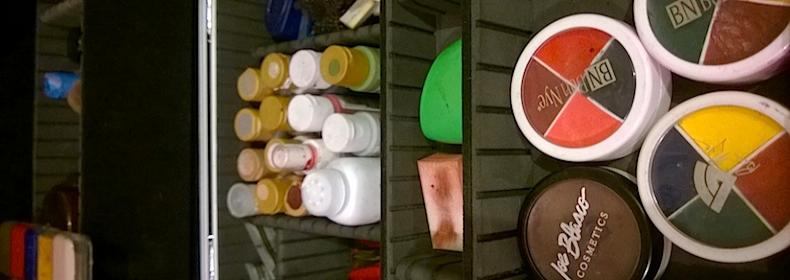
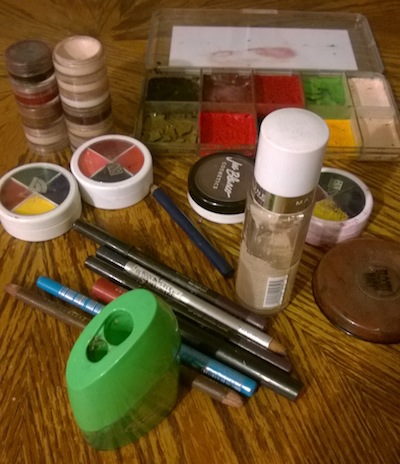
This is where I like to keep all of my grease
paints, cream colors, stacks, cake make ups, lip
liners, eye liners, a liner sharpener, liquid
foundations, color crayons and even my alcohol
activated paints together.
Again, it’s not just a matter of preventing
confusion or wasted time rummaging through
your kit, it also helps keep you organized and
conscious about always keeping every color
make up together with it's own lid on.
At the same time, you prevent whatever you are
keeping these colors inside of, from getting
painted as well. Trust me, there’s few
frustrations like opening your make-up kit up to
find all your grease paints mixed together into
what looks like a melted Picasso painting, and
having to clean that up.
This is where I like to keep all of my grease
paints, cream colors, stacks, cake make ups, lip
liners, eye liners, a liner sharpener, liquid
foundations, color crayons and even my alcohol
activated paints together.
Again, it’s not just a matter of preventing
confusion or wasted time rummaging through
your kit, it also helps keep you organized and
conscious about always keeping every color
make up together with it's own lid on.
At the same time, you prevent whatever you are
keeping these colors inside of, from getting
painted as well. Trust me, there’s few
frustrations like opening your make-up kit up to
find all your grease paints mixed together into
what looks like a melted Picasso painting, and
having to clean that up.
| (The Colors Department) |
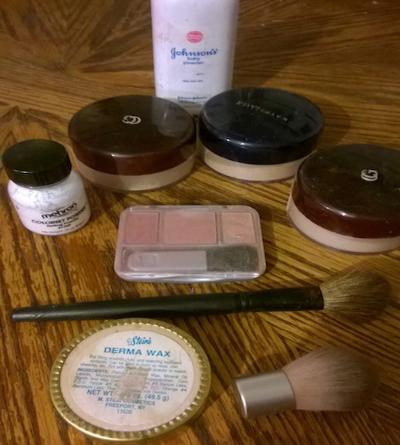
THE POWDER/SKIN DEPARTMENT:
Again, here is another situation where keeping
your materials neatly organized together with
their own lids will help you quickly get what you
need to get the job done.
I tend to keep my derma wax with my foundation,
colorset, and talcum powders, as I don't want
any of these items anywhere near any kind of
liquids or the prone to melt grease/oil based
materials that I have.
It is also a good idea to secure the lids back onto
your powders as soon as you can to avoid
messy powder spills, or if you're working near
any electronics, to avoid the powders getting into
the electronics and causing issues there.
Obviously, this is also the key area to store your
foundation brushes, as well.
Again, here is another situation where keeping
your materials neatly organized together with
their own lids will help you quickly get what you
need to get the job done.
I tend to keep my derma wax with my foundation,
colorset, and talcum powders, as I don't want
any of these items anywhere near any kind of
liquids or the prone to melt grease/oil based
materials that I have.
It is also a good idea to secure the lids back onto
your powders as soon as you can to avoid
messy powder spills, or if you're working near
any electronics, to avoid the powders getting into
the electronics and causing issues there.
Obviously, this is also the key area to store your
foundation brushes, as well.
| (The Powders Department) |
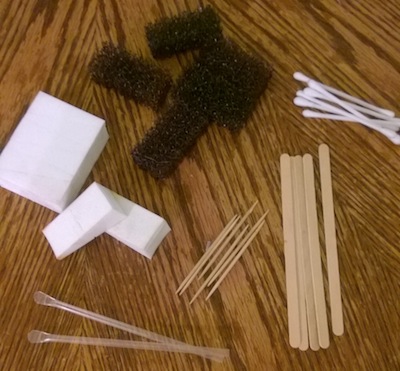
THE APPLICATORS DEPARTMENT:
While I do keep some applicators in some of the
departments, it is a good idea to keep a section
of clean applicators separate from your other
materials. Think of this section as a back-up
supply of applicators.
This area is where I’ll keep sponges, make up
sponges, stipple sponges, Q-tips, a variety of
coffee stirrers, tooth picks, even cotton balls, too.
We all may well keep specific applicators of the
same kinds with specific other materials, but
keeping a bulk of applicators in one will not only
save you from mixing your materials, but can
speed you along in getting what you need out of
your kit.
While I do keep some applicators in some of the
departments, it is a good idea to keep a section
of clean applicators separate from your other
materials. Think of this section as a back-up
supply of applicators.
This area is where I’ll keep sponges, make up
sponges, stipple sponges, Q-tips, a variety of
coffee stirrers, tooth picks, even cotton balls, too.
We all may well keep specific applicators of the
same kinds with specific other materials, but
keeping a bulk of applicators in one will not only
save you from mixing your materials, but can
speed you along in getting what you need out of
your kit.
| (The Applicators Department) |
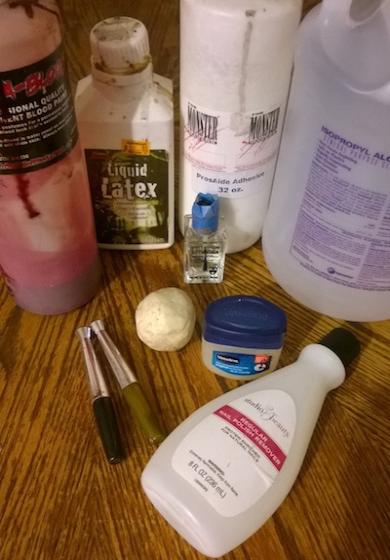
THE HIGHER CHEMICAL DEPARTMENT:
It should go without saying, but every
item/substance in this department needs to be
double-checked for tight, secure closure for the
containers that house them, not just the
containers each individual chemical based
substance comes in, but also the overall
container/kit area you keep them together in.
These are the items that you really, really don’t
want leaking or spilling out any.
For me, I keep the following in the same area:
Oil based clay, tooth enamels, petroleum jelly
(and/or whatever release agent), acetone, liquid
latex, pros aide, alcohol(s), perma-blood, rigid
collodian and even spirit gum/remover and such,
as well.
Also, whenever possible (best to try ensuring
this) keep these items in a rather temperate
environment, too. It’s never good to ever have
these items freezing or getting too hot, as all of
these substances truly do contain higher
chemicals in them.
It should go without saying, but every
item/substance in this department needs to be
double-checked for tight, secure closure for the
containers that house them, not just the
containers each individual chemical based
substance comes in, but also the overall
container/kit area you keep them together in.
These are the items that you really, really don’t
want leaking or spilling out any.
For me, I keep the following in the same area:
Oil based clay, tooth enamels, petroleum jelly
(and/or whatever release agent), acetone, liquid
latex, pros aide, alcohol(s), perma-blood, rigid
collodian and even spirit gum/remover and such,
as well.
Also, whenever possible (best to try ensuring
this) keep these items in a rather temperate
environment, too. It’s never good to ever have
these items freezing or getting too hot, as all of
these substances truly do contain higher
chemicals in them.
| (The Higher Chemical Department) |
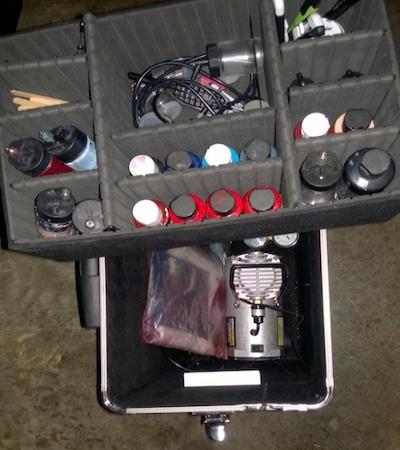
THE AIRBRUSH DEPARTMENT:
If you use airbrush equipment, stencils, paints to
any degree, you know the multitude of space
and separation of items you are better off
having. You need a set area to better have at
the ready for your airbrush guns, replacement
parts for the guns, cleaning tools, your
compressor(s), compressor parts, valves,
reducers, hoses, any quick change jars or
bottles for your paints, the paints themselves,
stirring sticks of any kind, Teflon tape, any
stencils you have, paper towels or wet wipes
again, bottled water comes in handy and having
a pair of pliers or channel locks will all prove
necessary for you.
And if you're interested in cleaning tips for your
airbrushing equipment, check out this past
article I wrote, where I go into detail on that.
If you use airbrush equipment, stencils, paints to
any degree, you know the multitude of space
and separation of items you are better off
having. You need a set area to better have at
the ready for your airbrush guns, replacement
parts for the guns, cleaning tools, your
compressor(s), compressor parts, valves,
reducers, hoses, any quick change jars or
bottles for your paints, the paints themselves,
stirring sticks of any kind, Teflon tape, any
stencils you have, paper towels or wet wipes
again, bottled water comes in handy and having
a pair of pliers or channel locks will all prove
necessary for you.
And if you're interested in cleaning tips for your
airbrushing equipment, check out this past
article I wrote, where I go into detail on that.
| (The Airbrush Department) |
While working as a special effects artist, preparation is key. Being so well set up, all items divided
for efficiency and speed, it will matter on a film set. It always does for me. Once on a film set, once
those cameras are rolling, you will find yourself needed to do any kind of extra fx work fast, fast,
fast. “Time is money” in any true business or industry, and I promise you that the film industry
proves and relies upon that belief more than possibly any other industry. The better prepared and
set up your fx kit, I guarantee you that the more people you work for will mention you as being quick
and professional. That’s the best reward you can get besides paid work because it will be your
reputation as a professional that decides you further getting paid work.
Duane P. Craig is a writer and special FX artist in Memphis, TN and has been working in the
independent film industry since 2003.
for efficiency and speed, it will matter on a film set. It always does for me. Once on a film set, once
those cameras are rolling, you will find yourself needed to do any kind of extra fx work fast, fast,
fast. “Time is money” in any true business or industry, and I promise you that the film industry
proves and relies upon that belief more than possibly any other industry. The better prepared and
set up your fx kit, I guarantee you that the more people you work for will mention you as being quick
and professional. That’s the best reward you can get besides paid work because it will be your
reputation as a professional that decides you further getting paid work.
Duane P. Craig is a writer and special FX artist in Memphis, TN and has been working in the
independent film industry since 2003.